

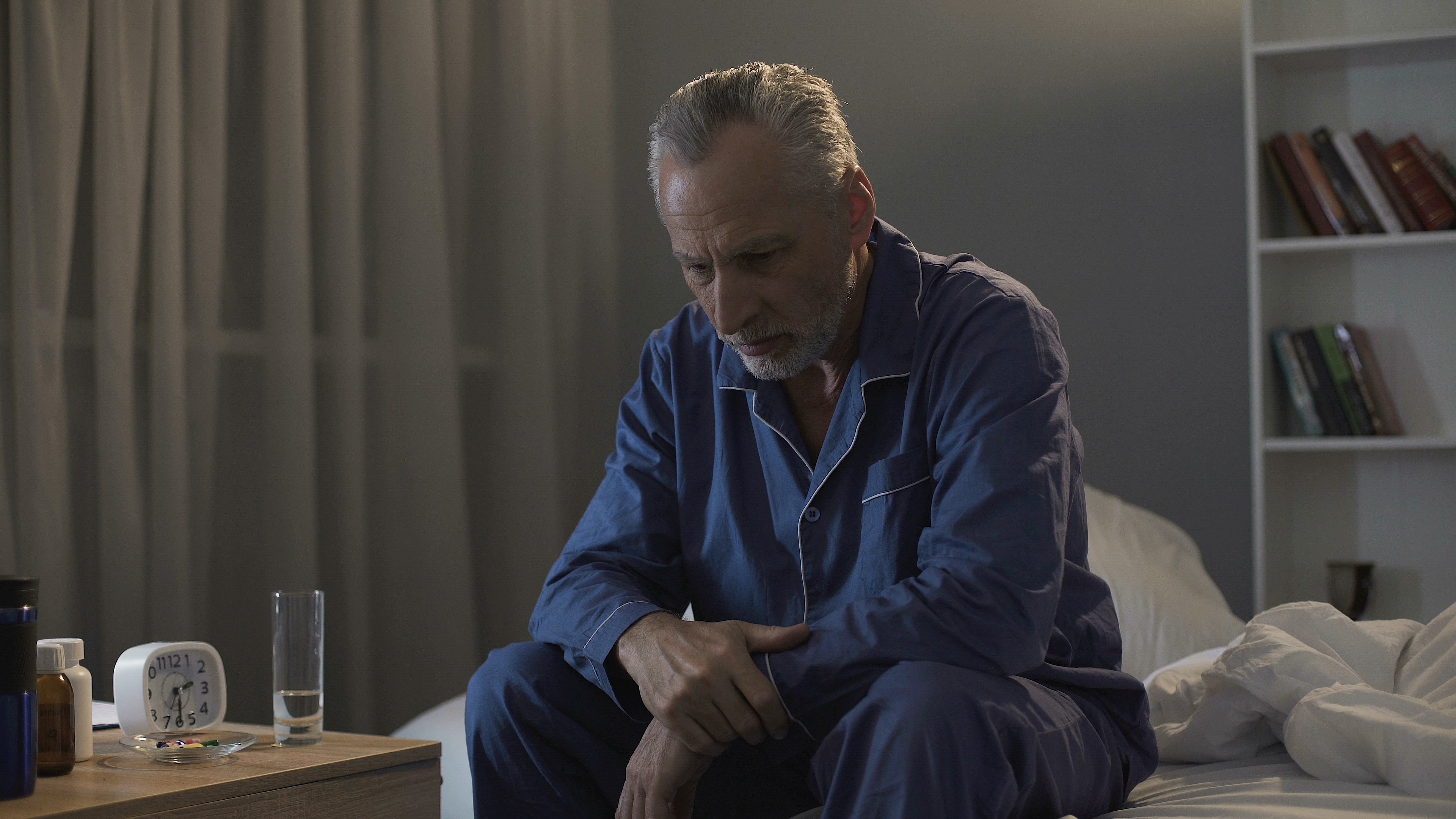
If you’re over 50 and not sleeping as well as you used to, you’re not alone. Many older adults deal with restless nights, early awakenings, or lingering fatigue. It’s easy to chalk it up to aging. But for many, poor sleep may point to something more serious, like obstructive sleep apnea (OSA) — a common but often undiagnosed condition in older adults that’s linked to poorer physical and mental health.
Read: More helpful health stories
Discover: Save on shopping & travel
A large Canadian study found that middle-aged and older adults at high risk of sleep apnea were about 40% more likely to report mental health problems, and just as likely to develop them over time.
What the Study Looked At
Published in JAMA Network Open, the study analyzed data from the Canadian Longitudinal Study on Aging. Researchers followed more than 30,000 adults ages 45 to 85 at baseline and nearly 28,000 participants for an average of 2.9 years. At baseline, nearly one in four participants (23%) was already at high risk for sleep apnea. By follow-up, that number had risen to 27%. About one-third met criteria for poor mental health, with the strongest links seen in mood disorders and clinical depression.
Even after accounting for income, chronic illness, and other health conditions, the pattern held. People at high risk of sleep apnea were about 40% more likely to report poor mental health at both baseline and follow-up. And this wasn’t limited to people already struggling. Among nearly 20,000 participants without mental health problems at the start of the study, those at high risk for sleep apnea were 20% more likely to develop them over time. When researchers accounted for changes over time, the risk rose to about 40%.
A Two-Way Street
The researchers point to several biological pathways that could help explain the link.
“Although more detailed studies are needed,” the authors wrote, “our findings suggest OSA may influence depressive states in older adults, potentially through its association with cardiovascular health” — a well-known risk factor for depression later in life.
Repeated drops in oxygen during sleep trigger surges in the body’s “fight-or-flight” response, raising stress hormones like cortisol and causing spikes in heart rate and blood pressure. Over time, this strain can damage blood vessels, promote hypertension, and increase cardiovascular disease risk. Frequent sleep disruptions also prevent the body from entering a truly restorative state. Instead, the nervous system stays on high alert. Sleep deprivation makes the brain’s emotional alarm system more reactive — while weakening the prefrontal cortex, which helps regulate emotions — leaving people less able to cope with stress and more vulnerable to anxiety and low mood.
The relationship may also work in the opposite direction. Mental health conditions can contribute to weight gain and disrupt the neurological processes that help keep the airway open during sleep, increasing the risk of sleep apnea.
The Silent Enemy
OSA is estimated to affect nearly 936 million adults worldwide. While there’s no single cure, effective treatments — such as CPAP machines, oral devices, and, in some cases, surgery — can significantly improve sleep and reduce health risks.
The bigger challenge is recognition.
“This condition is easily missed because many older adults do not complain of daytime sleepiness,” Dr. Alberto Ramos, Professor of Clinical Neurology and the Research Director of the sleep disorders program at the University of Miami, Miller School of Medicine, told Nifty50+, adding that they may feel “just tired,” blame aging, or live alone.
An estimated 80 to 90% of people with OSA remain undiagnosed, leaving millions vulnerable to serious health complications over time. Ramos said that in older adults, a common warning sign of sleep apnea is “loud, habitual snoring with pauses in breathing, which is often noticed by a bed partner rather than the person affected.”
Another helpful tool for screening OSA is the STOP questionnaire, which looks for four key red flags: snoring, daytime tiredness, observed pauses in breathing during sleep, and high blood pressure. This was the same screening tool used in the study, with a score of two or more indicating high risk for OSA.
Symptoms, however, are only part of the picture. Because most breathing interruptions happen during sleep, many people are unaware of them. This is especially true for older adults, whose symptoms may look different from the classic presentation seen in younger people.
“This condition is easily missed because many older adults do not complain of daytime sleepiness.” — Dr. Alberto Ramos, Research Director of the sleep disorders program at the University of Miami
Ramos explained that sleep apnea in later life often shows up in quieter, atypical ways. These include:
- Frequent nighttime urination
- Low mood
- Memory problems
- Poor concentration
- Morning headaches
Other atypical presentations may include bedwetting, particularly when it’s new or unexplained, repeated falls, and vision problems (fluctuating or blurry vision) related to reduced oxygen levels overnight.
When sleep apnea is suspected, an overnight sleep study, called polysomnography, remains the gold standard for diagnosis. Conducted in a sleep lab, it provides a detailed picture of sleep by monitoring brain activity, oxygen levels, breathing patterns, and heart rate.
Impact Goes Beyond Sleepiness
The authors suggest that pairing sleep assessments with mental health screening could help identify older adults at risk earlier — before problems become more entrenched.
Alberto agrees, noting that treating sleep apnea early is crucial because repeated drops in oxygen and fragmented sleep strain the heart and brain over time, increasing the risk of stroke, memory loss, depression, and loss of independence. “Managing it can protect brain health, improve daily function, and help older adults stay sharp, steady, and independent longer.”
In an invited commentary, Giulia Ogliari, MD, PhD, and colleagues echoed that message, urging clinicians and patients alike to think of obstructive sleep apnea as a potential driver of psychological and cognitive decline later in life. This perspective is especially relevant for older adults, many of whom already manage multiple health conditions or take several medications — factors that can make it harder to bounce back when something goes off track. Poor mental health can also quietly erode day-to-day functioning, sapping motivation, making self-care harder, and interfering with treatment adherence.
Keep Your Sleep and Health
Poor sleep isn’t just about the next day. While not every restless night signals a serious problem, ongoing sleep issues are worth paying attention to. Noticing changes in sleep and talking about them with a healthcare provider may be one of the simplest ways to protect mental and physical health as we age.
More from Nifty50+
- Studies confirm a nomadic lifestyle can aid your health in retirement
- Understanding Costs and Amenities in Senior Living
- Open Mouth, Insert Foot: Irene Bremis is still bringing the funny at 59
- Understanding types of long-term care services