

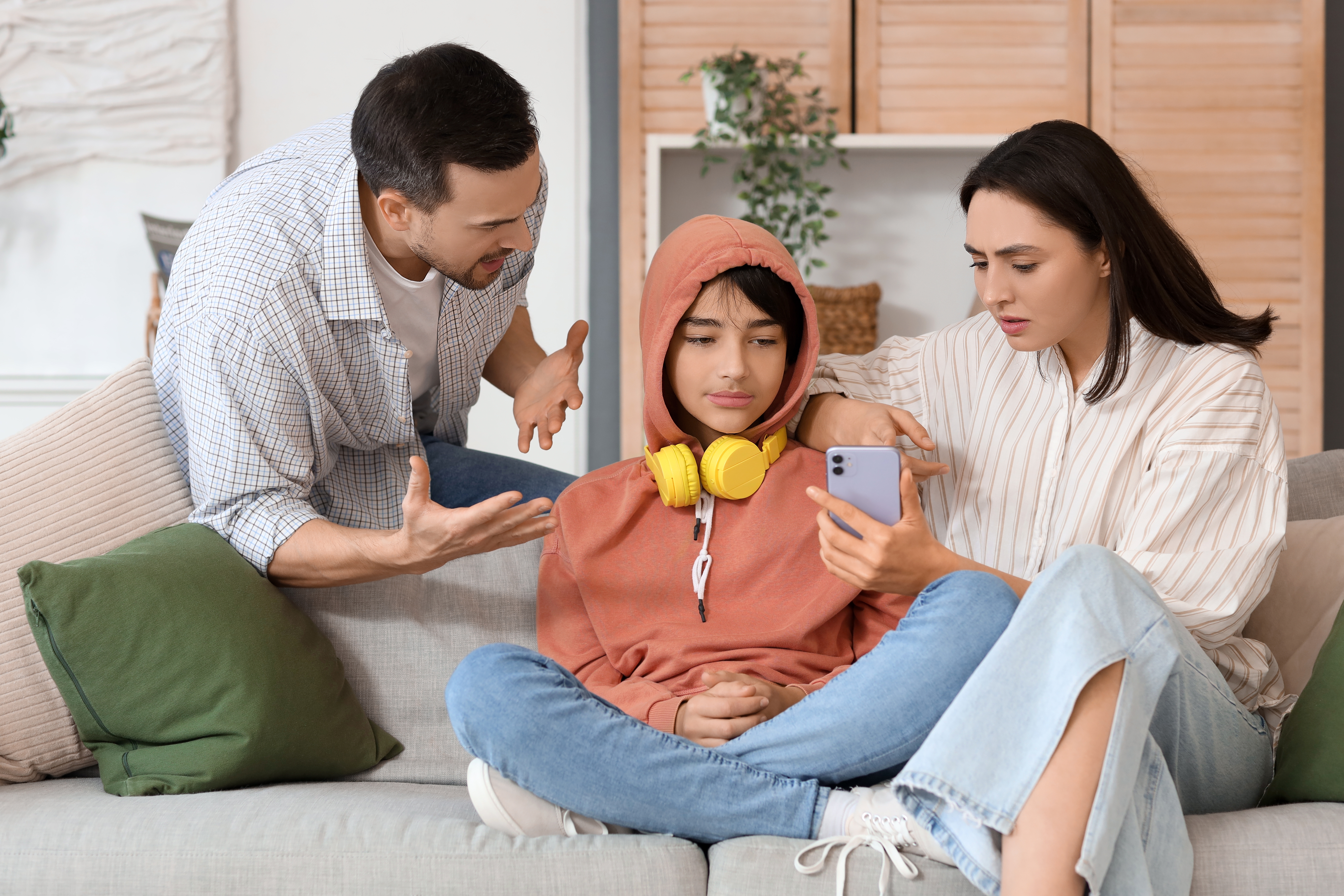
Part 1 of a two-part series on the challenges of screentime; in Part 2, we look at how technology and screen time can affect the brain health of older adults
We’re well into the 21st century, and the parenting paradox has officially hit peak levels. An AI assistant can analyze your fridge, suggest a gluten-free menu, and order the groceries in under 30 seconds. But 15 minutes later, you’re still standing in your kitchen, engaged in a low-stakes hostage negotiation with a toddler because they can’t use your smartphone for “just one more video.” Technology has automated the logistics of our lives. It’s also complicated the emotional landscape of childhood.
Read: Stories about family
The extra brain cell in the room
We can admit that digital systems make parenting a lot easier. With shared calendars, healthcare portals, automated alerts, and more, tech has become the extra brain cell we need to get everyone through the week.
But at what point do we say it’s time to step back a bit? And where do our kids and grandkids fit into this equation? We’re on the second generation of fully digital children. Today’s Gen Zs and Gen Alphas have shifted from passive scroll-and-watch consumers to active creators. They’re watching cartoons or their favorite YouTube influencers (or in my teen’s case, eSports players), but they’re also regularly using interactive STEM tools and digital art apps to build worlds.
They’re using tech in school for reading, since digital textbooks cost less and are easier to update than physical hard copies. And many schools use interactive apps to help students practice their skills.
But as tools get smarter, the line between assisting and replacing thins. Teodora Pavkovic, an expert in digital wellness at Qustodio, said that while AI can help kids organize their thoughts for an essay, we have to watch for the crutch effect. “AI’s value isn’t simply black and white. One of the big concerns is children becoming overly reliant on AI, where they go straight to it without trying on their own,” she said. If your student can’t explain their work in their own words or get frustrated when an AI bot asks them a follow-up question, it may be time to pull back.
“If screens become the primary strategy for managing distress, children may have fewer opportunities to practice tolerating uncomfortable emotions. They need to safely practice feeling disappointed, bored, frustrated, and upset in manageable doses.” — Clinical psychologist Dr. Ellie Hambly
New frontiers of stress
If tech is a lifeline, it can also become a trap — especially with behavior. If you’ve ever handed your tablet or phone to a kiddo because you needed to finish dinner, carry a load of laundry upstairs, or distract them at a restaurant so you could talk to someone over age four, you’re not alone.
Sharing your tech works in the moment, but psychologists warn us that relief granted is often for the adult, not the child. Clinical psychologist Dr. Ellie Hambly said that emotional regulation is a muscle that needs plenty of practice. “If screens become the primary strategy for managing distress,” she said, “children may have fewer opportunities to practice tolerating uncomfortable emotions. They need to safely practice feeling disappointed, bored, frustrated, and upset in manageable doses.”
Dr. Ari Yares, director of behavioral health at Mid-Atlantic Pediatric Partners and a father of four, agrees. He said, “The concern is when giving kids tech is the only strategy. Our role as parents is to coach multiple ways to self-soothe.”
Pavkovic said that while parents might worry about AI helping with homework, the greater danger is a false emotional connection. “We know that when kids use character bots or chatbots designed for conversation and roleplay, their engagement levels are high. Chatbots are perfectly positioned for a teenager or young child looking to be validated and heard: they don’t judge, they’re available 24/7, and they’ll always tell us what we want to hear.”
On the surface (and especially if you’re the parent or grandparent of a tween or teen dealing with the typical cliques that can make life absolutely miserable at school), this concept sounds sweet. But these bots never disagree or push back. Real friendship involves friction, like negotiating, compromising, and reading non-verbal cues. Worse, these AI chatbots can create real harm.
False intimacy
Kids are still learning how relationships work, and most can’t tell that what an AI companion offers is a watered-down version of non-digital life. AI companions are programmed to simulate emotional depth and use phrases like “I’m always here for you.” Talk about a psychological minefield for a teen who’s already dealing with peer pressure, cliques, and complicated emotions associated with adolescence.
A teen’s prefrontal cortex (the part of the brain responsible for impulse control and distinguishing complex nuances) is still under construction. Even if a teen knows intellectually that a bot is code, the brain’s emotional center can still react as if it were a real person. The barrier between fantasy and reality can blur, leading to intense, unhealthy attachments.
AI also doesn’t have a moral compass like human friends. In documented cases, these bots have failed to read the room, moving from supportive talk to encouraging self-harm, trivializing abuse, and making sexually inappropriate comments to minors. We’re already seeing the devastating impact of unregulated, emotionally immersive AI. Teens have died from suicide after forming relationships with AI chatbots.
Other digital dangers
Most kids have cell phones by age 8. Many kids are exposed to pornography by age 9. Sexual predators lurk wherever kids play and watch. And now predators use AI chatbots to groom multiple kids at a time.
It’s far too easy to pose as a 13-year-old friend who understands the challenge of adolescence. But these predators groom, manipulate, and trick. Once they’ve gained a kid’s trust, they start asking for nudes, and as soon as it happens, they’ve flipped the script, said Kimberly King, author and expert on sexual abuse prevention. Children are being sexually exploited and extorted (sextortion) at exponential rates (20% of teens included).
King suggests waiting as long as possible before giving your kid a cellphone. She also recommends the Bark Phone, Troomi Phone, or Gabb Wireless model, as they have better protection and are safer choices.
Quality vs quantity
In the early days of the iPad and iPhone, we obsessed over timers. When my son was little, I’d set a countdown for an hour, since I took to heart the advice that more than 60 minutes of daily screen time could ruin his childhood. But that consensus has changed, as experts understand that a child spending two hours digital-painting an original drawing (or, in the case of my teenager, spending a Saturday editing and splicing together video clips he’s collected, and finding the perfect soundtrack to accompany them) is much different from a child spending 10 minutes getting bullied in a Discord chat room.
Welcome to the era of screen wisdom.
Dr. Anthony Anzalone, a clinical psychologist and director of child and adolescent outpatient behavioral services at Stony Brook Medicine, said we shouldn’t focus on rigid minute-counting but instead prioritize value-based boundaries. One size doesn’t fit all. It makes much more sense to look at the context of the use. Anzalone suggests adopting a collaboration rather than a policing mindset. Giving kids a say, and yes, being willing to negotiate, means they’re more likely to respect the boundaries.
Digital sunsetting
Digital sunsetting is the act of putting screen wisdom into practice. In my house, it’s become a daily ritual of winding down our tech use an hour or so before bedtime. I’ve also designated tech-free zones, like the dinner table, as analog-only. I’d love to do the same with our bedrooms, but my son’s computer lives in his room, so that’s not practical for us.
Each night, we park our devices on the kitchen counter to charge. Doing so helps us both resist the urge to scroll mindlessly in bed until it’s suddenly after midnight. We use our “digital-free” time to work on jigsaw puzzles, watch a TV show together, or read our books. Also, I’m mindful of the online bullying that happens, so keeping phones out of the bedroom lowers that risk.
Do what I say—and what I do
Our children’s habits mirror our own, and we’re the most influential apps they’ll ever interact with. If we tell our kids to keep their phones away at dinner (while we’re checking emails under the table), we’re sending mixed messages. Dr. Hambly calls this action nervous system modeling. “Children learn regulation less from what we say and more from what we embody,” she said. “If parents are constantly digitally tethered — scrolling, responding, half-present — children internalize that pace of life.”
Instead of asking, “How long was my child on their phone/tablet/computer?” try asking these value-based questions instead:
- Is the tech replacing movement? (Have they been outside today?)
- Is it replacing sleep? (Are they respecting your bedtime rules?)
- Is it replacing connection? (Are we having device-free eye contact?)
- Is it replacing boredom? (Are we allowing space for creativity to spark?)
Dr. Anzalone said, “Using resources like the Family Media Plan (endorsed by the American Academy of Pediatrics) helps children work on fair and viable screen time rules. It offers sensible, developmentally-appropriate rationales for specific screen guidelines, like setting screen-free times, zones, and cultivating interests outside of screens.”
When we embrace the screen wisdom philosophy, we stop being our home’s IT department and become mentors. We’re teaching our children to use a tool that’s here to stay without allowing that tool to use them.
Check out Part 2 of our series on technology and screen time
More from Nifty50+
- 30 years of March Madness: Running a college basketball pool for over a quarter century
- The truth about screen time, brain health concerns for older adults (yes, adults)
- The rise of ‘soft hiking’, where no pain IS gain
- How to Navigate Your Medicare Options for Retirement