

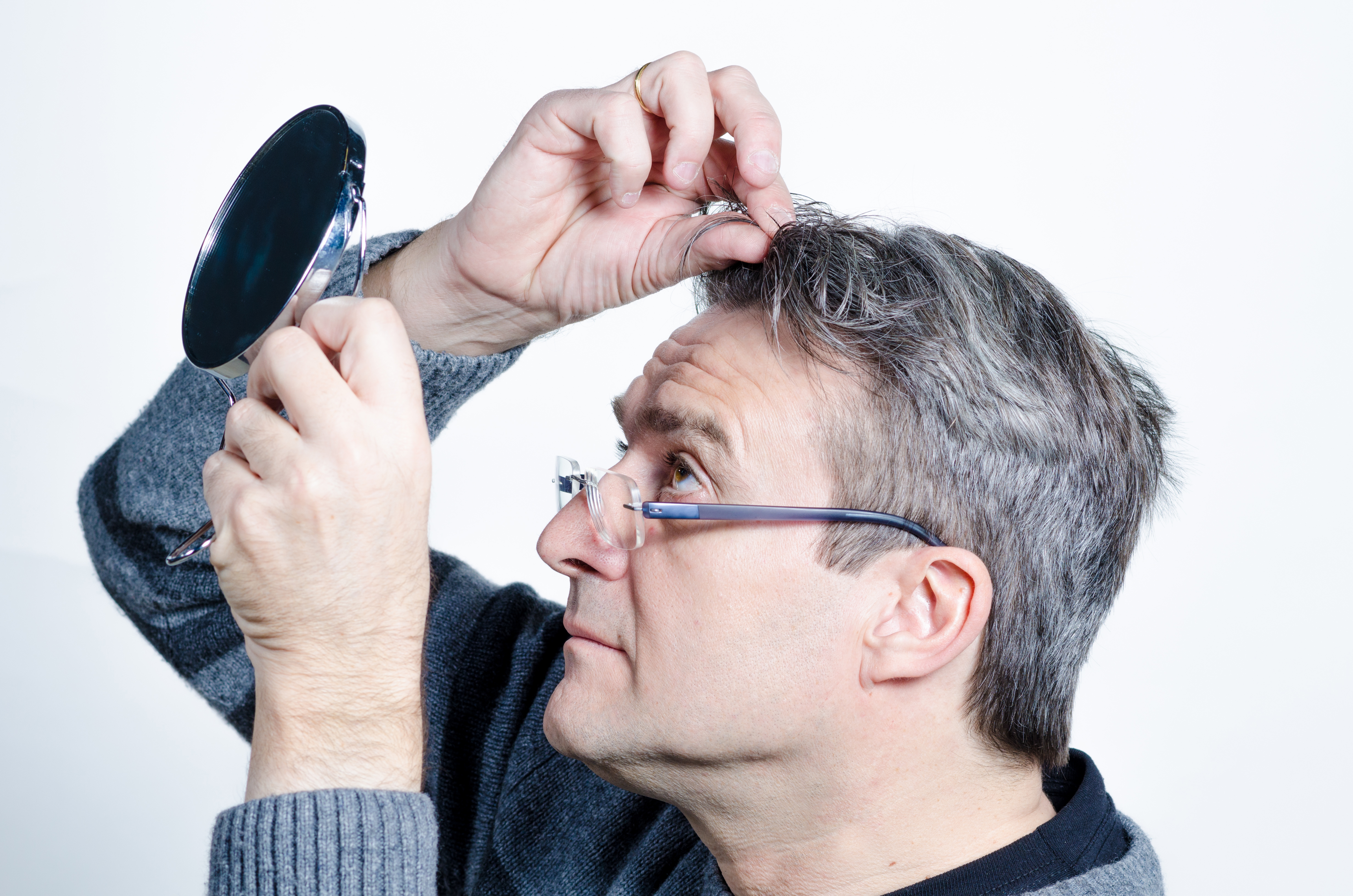
We often call hair our “crowning glory” because of how it frames the face and shapes how we look and (sometimes) feel about ourselves. But hair is more than just an aesthetic feature — it can also offer clues about what is happening inside the body. Hair aging changes, such as graying, thinning and balding, are extremely common — and often expected — as we grow older. Graying hair, in particular, is one of the most familiar signs of aging, typically beginning around age 34 to 44. But when graying appears much earlier, often defined as before age 30, it may reflect more than genetics or normal aging. Some researchers consider premature graying a possible visible marker of faster biological aging.
Read: More helpful health stories
Discover: Inspiring stories from GenX and Boomers
One study showed young smokers with premature graying had about 3.24 times higher odds of having coronary artery disease. But it may not just be the presence of gray hair but also how much of it appears. An Egyptian study looked at 545 men undergoing CT coronary angiography for suspected coronary artery disease (CAD). Researchers graded the extent of hair graying and compared it with the presence and severity of coronary artery disease. Men with CAD tended to have more gray hair, even after accounting for age and other cardiovascular risk factors such as hypertension and dyslipidemia. The underlying mechanism appears to involve oxidative stress, a biological process linked to aging and chronic disease. Severe stress can damage pigment-producing cells in hair follicles. This same cellular stress may also contribute to damage in blood vessels.
“Our findings suggest that, irrespective of chronological age, hair greying indicates biological age and could be a warning sign of increased cardiovascular risk,” Dr. Irini Samuel, a lead author of the Egyptian study said in a news release.
A Korean study found that those with premature gray hair were significantly more likely to have two or more metabolic risk factors, including elevated blood pressure, larger waist circumference, elevated fasting blood sugar, and lower HDL cholesterol. Even when heart disease has not yet been diagnosed, these kinds of metabolic changes may already be developing beneath the surface. In that sense, visible signs such as early graying may serve as a useful prompt to check cardiovascular risk factors and adopt healthier habits.
Dr. Dhammdeep Humane, lead author of another study that found men with both premature graying and baldness had a fivefold higher risk of developing heart disease before age 40, said these men “should receive closer monitoring for coronary artery disease and guidance on lifestyle changes such as a healthy diet, regular exercise, and stress management.”
Hair as a Biological Archive of Stress
Scientists are also learning that hair does more than show visible changes — it may also store a timeline of stress inside the body. Hair follicles are commonly used in drug testing because substances circulating in the bloodstream become incorporated into the growing hair shaft, leaving a record that can persist far longer than what blood or saliva tests capture. In a similar way, strands of hair can also store cortisol, the body’s primary stress hormone. Because hair grows about 1 centimeter per month, researchers can segment a strand and reconstruct a timeline of physiological stress stretching back months or even years.
Elevated cortisol may create an inflammatory environment around hair follicles, pushing hairs prematurely into the resting phase of the hair cycle. Instead of patchy bald spots, this often leads to gradual thinning across the scalp, which you may notice during washing or brushing. Hair may also appear finer and more fragile than usual. A growing body of research links elevated hair cortisol levels to a higher incidence of coronary heart disease, stroke, and peripheral arterial disease. One recent study found that cortisol levels embedded in hair were gradually rising in the months leading up to an acute myocardial infarction (heart attack) compared with control participants.
Hair as a Metabolic and Hormonal Indicator
Hair can also reflect broader metabolic and hormonal changes happening inside the body.
Several medical conditions can show up through changes in hair texture, growth, or shedding, including:
- Thyroid disorders, which can cause diffuse hair thinning
- Iron deficiency, a common trigger of hair shedding
- Vitamin D, zinc, or B-vitamin deficiencies, which can weaken hair growth
- Hormonal imbalances, including menopause-related changes
- Chronic inflammation or metabolic disorders
These links exist because hair follicles are among the most metabolically active tissues in the body, relying on adequate nutrients and hormonal balance to maintain normal growth. Older adults may face an additional factor: use of multiple medications. Drugs commonly prescribed for cardiovascular conditions — including beta-blockers, anticoagulants, ACE inhibitors, and statins — have been documented to trigger telogen effluvium, a temporary form of stress-related hair shedding. This creates an ironic clinical situation: the very medications protecting the heart may also contribute to visible hair thinning.
Nutrition is another. The nutrients most important for healthy hair, like iron, zinc, vitamin B12, vitamin D, protein, and essential fatty acids, are the same nutrients that older adults commonly lack due to reduced absorption, dietary restrictions, or limited sun exposure. As a result, dull, brittle, or thinning hair in an older adult may sometimes signal underlying nutritional insufficiency that warrants medical evaluation. Meanwhile, excessive supplementation, particularly of vitamins like A or selenium, can paradoxically worsen hair loss.
Your Hair Is More Than Cosmetic
Hair changes alone cannot diagnose heart disease. But they can sometimes serve as early visual clues that reflect deeper biological processes — such as oxidative stress, hormonal shifts, or chronic inflammation — that also influence cardiovascular health. In that sense, your hair may be doing more than shaping how you look. It may be quietly telling a story about your body’s overall health … including your heart.
More from Nifty50+
- Americans agree on politics more than you think — just not with these people
- Challenges of caring for elderly family add up; get expert tips to help
- Want to be a better spouse? Get an exercise routine
- Why weight fluctuations matter in aging adults