

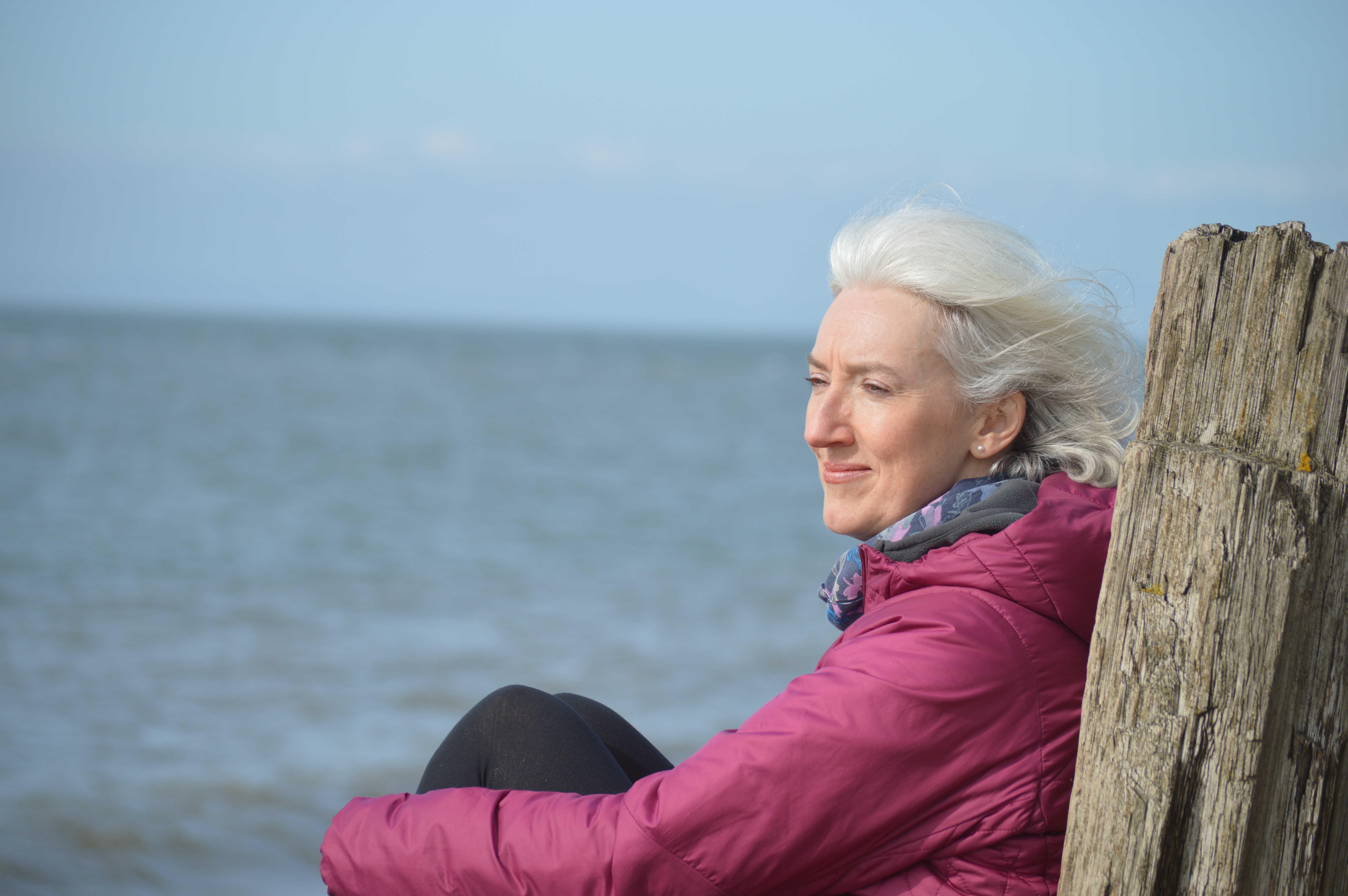
Alex Morgan was lying in bed in the summer of 2022 with Covid. She was 58. A bit bored, Morgan took an ADHD quiz online. Negative. Then she noticed the fine print on the test. It read that if you have one form of neurodivergence, it’s worth checking for others since many go hand in hand. She knew she had dyspraxia. So she took the AQ-50, an autism screening standard in the UK. When she reached the end, she looked down at her score: 39. Scores above 32 are considered definitive for autism.
“I was in shock,” she recalls. “I was numb. But I didn’t doubt it. I somehow knew this was the answer.”
Read: More helpful health stories
Discover: Inspiring stories from GenX and Boomers
Today is National Autism Awareness Day and Morgan is one of a rapidly expanding group: adults, many of them women, receiving autism diagnoses in their 50s and 60s. According to research from the SPARK for Autism study, approximately half of autistic adults were not diagnosed until after age 17. A 2024 study published in JAMA, analyzing health records for over 12 million people, found that adults are now showing the steepest increase in new autism diagnoses of any age group with a 450 percent increase among adults between 26 and 34 between 2011 and 2022. The Organization for Autism Research estimates that 80 percent of the autistic population is over 18, yet less than one percent of autism research has focused on adults.
Several forces converged to drive this wave. Covid pushed millions of people indoors and out of the daily social life and in the quiet and mundane. Many noticed how simpler it was to work from home. By removing social masking pressures and increasing time for self-reflection many sought an answer. Many others arrive at a diagnosis through their children: a child’s evaluation prompts a parent to recognize the same patterns in themselves, a phenomenon clinicians describe as almost routine. And increasingly, the path runs first through ADHD. According to Psychology Today, roughly 50 to 70 percent of autistic people also meet the criteria for ADHD, a co-occurrence the neurodivergent community has named AuDHD. For many adults, an ADHD diagnosis comes first and once being medicated for ADHD and that noise quiets, what remains is something that finally makes so much make sense and its name is autism.
Gen X’s ‘I don’t belong here’ Feeling Was Very Real for Many
The reasons an entire generation slipped through are layered, having to do with gender, race, and a longstanding stigma about the diagnosis. Most autism studies focused on boys and on white populations. Furthermore, research published in the National Institutes of Health’s database shows that late diagnosis is significantly more common in females and in individuals with higher IQs, who are often able to navigate social demands well enough, for long enough, that the cracks don’t show. Many of the coping mechanisms those with autism learn are what also causes many people to go undetected include masking, mirroring others, suppressing instincts, practicing and orchestrating social situations before they happen to seem “normal” in public.
“I masked unconsciously for nearly 60 years,” Morgan says. “I recognize now the toll that took on me, on my mental and physical health. I spent my whole life being ill in one way or another, having headaches, having nervous breakdowns, which I now realize were nothing of the sort. It was autistic burnout.”
Dr. Rachel Loftin, chief clinical officer at Prosper Health, an autism and neurodivergent-focused therapy and assessment company, sees this history repeatedly.
“Often there’s an existing diagnosis of other kinds like anxiety disorders, depression, personality disorders, maybe ADHD,” she says. “These are women who’ve learned a lot of compensatory strategies. It’s understandable that they haven’t been picked up sooner, because we spend so much of our lives trying to present as if we have no problems at all.”
Estimates suggest 50 to 90 percent of autistic adults are unemployed or underemployed, according to Building Blocks Therapy. The U.S. Department of Education has found that nearly 60 percent of autistic people who receive vocational rehabilitation services go on to find employment but half of autistic youth who access those services begin in high school. For someone diagnosed at 55, that entire infrastructure was simply never available.
“I masked unconsciously for nearly 60 years. I recognize now the toll that took on me, on my mental and physical health. I spent my whole life being ill in one way or another, having headaches, having nervous breakdowns, which I now realize were nothing of the sort. It was autistic burnout.” — Alex Morgan, diagnosed with autism at 58
For Black men and women, the barriers run even deeper. Maria Davis-Pierre, a licensed mental health therapist and founder and CEO of Autism in Black, was 37 when a psychiatrist she’d gone to for ADHD medication management told her mid-session she was autistic. She didn’t believe him. She asked for formal testing.The testing confirmed her suspicion.
What Davis-Pierre, now 42, hears from other Black women over and over is a specific kind of exhaustion that gets misread at every turn.
“It’s women who have built their entire lives studying people, scripting conversations, forcing eye contact, pushing through sensory overwhelm, and then wondering why they’re always exhausted,” she says. “They’re being praised for being high-achieving and dependable, getting three or four degrees, while quietly struggling to just get through the day.”
Black women’s struggles, she adds, are almost never filtered through a neurodivergence lens.
“When it comes to Black women, it’s going to be a mood disorder or an eating disorder. Neurodivergence is not coming up first,” Davis-Pierre said. “When we’re walking into a room, you’re seeing the blackness first. You have to deal with that before you can even get to the disability.”
Studies show a three-to-five year lag between when a white child receives an autism diagnosis to when a Black child does and that’s an average. Her message to Black women in their 50s or 60s who suspect they might be autistic is: “It’s never too late to learn yourself differently. Late discovery doesn’t make your experience less real.”
Finding Each Other Through Podcasts
In the wake of all of these aha moments a growing ecosystem of podcasts has emerged built by and for people rereading their lives. Many prominent voices are British and Australian. In the UK and Australia, formal diagnosis is culturally accepted and workplace accommodations carry institutional support, making open disclosure less risky. Catherine Asta, a UK psychotherapist who hosts The Late Discovered Club described her diagnosis at 42 as realizing she built “an elaborate mask to enable me to live in a world that really wasn’t built for my brain.” In the US, Laura Key hosts ADHD Aha! by Understood.org, where listener after listener describes the same relay race: ADHD diagnosis first, then autism.
Dan Kerr, 53, a Melbourne-based diversity ambassador who hosts Late to the Party, now in its fourth season, spent nearly a decade in the 1990s working with autistic children and never once suspected he was one of them. The diagnosis came at 48. Before Covid, he says, he experienced daily life as “1,000 tiny anxieties” until working from home revealed, for the first time, how different things could feel with lighting that suited him, an environment that didn’t overwhelm or overstimulate him.
“When I’m masking, it’s putting on that act — the big smiles, excited, laughing. And as soon as I press leave, my face drops. It’s like a director says, ‘Cut.’ And when it says cut, I get to be me again,” Kerr said.
“It’s just like a left-hander working on a can opener. We’re not the problem — the culture is just not made to suit,” he added.
For Morgan, the rewriting has been gradual and, eventually, something close to joy. She founded theautisticwoman.co.uk to be, as she puts it, “the site I wish had existed.” Her memoir, Mother Tongue, is out this June. “I can afford to be open,” she says. “And I think it’s my moral duty to be.”
More from Nifty50+
- Choosing the Right Group Tour: Tips for Travelers
- Medical gaslighting: How to advocate for yourself with a doctor
- What are ‘brushing scams’ & how to protect yourself
- One kidney, two friends … and a life saved