

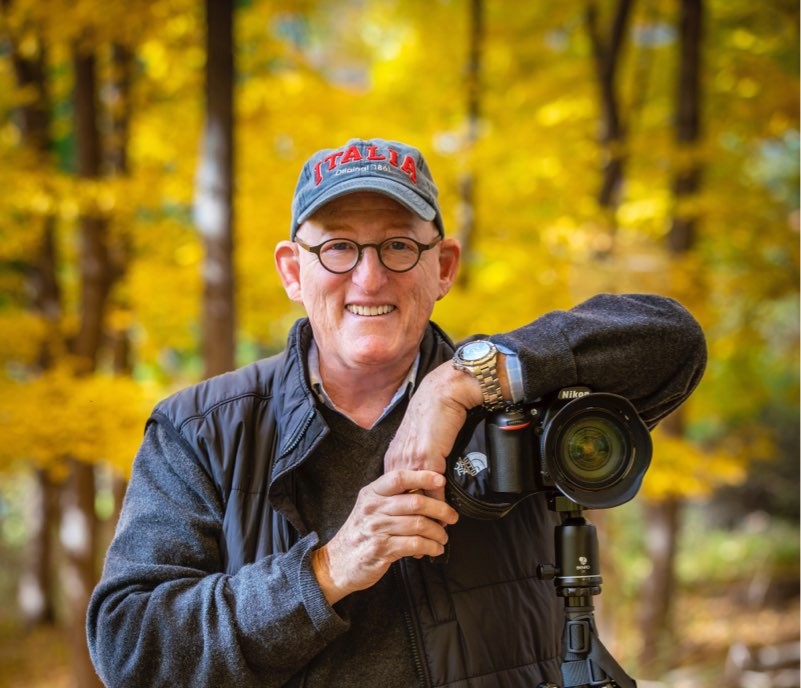
For 36 years, I immersed myself in a demanding and fulfilling career as a physician in diagnostic radiology and nuclear medicine. Each day I felt privileged to search for clues inside the human body, helping to explain illness and guide treatment. My identity, my self-worth, and much of my daily rhythm were tied to this work.
Read: More helpful personal finance tips
Discover: Stories about family
If you’ve invested decades into a career — whether as a CEO, teacher, small-business owner, or craftsman — you likely understand. Our work becomes not just what we do, but who we are. That kind of long-term devotion can be deeply rewarding. But it can also create challenges later in life, particularly when retirement comes into view.
When Work Becomes Identity
Psychologists sometimes call this enmeshment: when the boundaries between who you are and what you do blur so tightly that they feel inseparable. In her Harvard Business Review article, “What Happens When Your Career Becomes Your Whole Identity,” Janna Koretz warns of the identity crisis that can emerge when a career ends — whether by burnout, layoff, or retirement. Without new anchors, many experience anxiety, depression, or a sense of being unmoored.
It’s not hard to see why. For years, our days are structured, our interactions constant, our value measurable. Then suddenly, that scaffolding is gone. If we don’t create new foundations, we risk drifting.
Instead of asking, “What am I retiring from?” the better question is, “What am I retiring to?” — Harry Agress Jr., MD
Asking the Right Questions
So how do we prepare? It begins with honest reflection. Instead of asking, “What am I retiring from?” the better question is, “What am I retiring to?”
Consider:
- How will I fill this time in ways that feel purposeful?
- What is most important to me now?
- Where will I find a sense of identity and value beyond my career?
- How can I cultivate new connections while nurturing the old?
For many, another pressing question arises: how will this transition affect my closest relationships now that my spouse/partner and I suddenly find yourselves spending more hours together than you ever did during your working years. It becomes key to develop interests both independently and together and to be supportive of each other. Also, when inevitable little spats come up with someone you love, ask yourself: “What is more important — the relationship or being right?” That perspective can be invaluable.
The Four Freedoms of Retirement
One of the great advantages of retirement is what I call The Four Freedoms:
- Freedom from Failure – For most of our working lives, failure carries consequences — missed promotions, lost income, reputation at stake. In retirement, that pressure loosens. In my first big project upon retiring, presenting my photography, I faced plenty of rejection. Years earlier, I might have felt crushed. More recently, I realized it didn’t matter if I wasn’t “America’s Next Ansel Adams.” The success was in the trying. Retirement gives us permission to explore, to sing off-key, to paint badly, to simply enjoy.
- Freedom from Self-Comparison – Much of my life had been driven by measuring myself against others: grades, exams, medical training. Retirement offers liberation from that exhausting yardstick. You don’t need to measure your days against your neighbor’s golf game or your friend’s travel log. It’s enough that the activity brings you joy. Give yourself a break, experiment and just go for it. At this stage, there’s little or nothing to lose.
- Freedom from Others’ Expectations – Retirement is a chance to shed what others think you “should” be doing. Mel Robbins, in her book The Let Them Theory, suggests responding to other people’s judgments with two simple words: “Let them.” Let them think what they want. It is something which is pretty much out of your control and you can now choose to live on your own terms.
- Freedom from Valuation by Money – In our careers, success is often equated with salary or compensation. Retirement can shift that lens. When people asked me how my photography sales were going, I realized they were asking the wrong question. The right question was: “Are you enjoying your photography?” And the answer was: absolutely. When money is no longer the measure, joy and meaning take center stage.
Together, these freedoms create perhaps the first truly unencumbered season of our lives since childhood.

A Dynamic Stage
We live in an era where retirement is no longer a one-time event, but rather a stage that can stretch decades. That’s not just time to “fill” — it’s time to flourish. It’s a chance to deepen your relationships, nurture your health, and contribute in ways that align with your values. A time to experiment and rediscover passions, yet I often hear friends say, “I’d like to try _____, but I don’t think I’d be any good.” My advice: forget being “good.” Do it anyway. You might discover hidden talent — or simply enjoy the process. Either way, you win.
The best years of your life don’t have to be behind you. With openness, curiosity, and courage, they can be right in front of you. Retirement is not the end of the story — it’s the beginning of a new chapter. And like any great chapter, it’s worth writing with care.
By Harry Agress Jr., M.D., is the author of “Next Years Best Years – Taking Your Retirement to the Next Level”
More from Nifty50+
- Learning to love the word “husband” at 51
- Your Guide to Dating Over 50: Tips and Top Apps
- How to Spot and Avoid Scams Targeting Older Adults
- New report: US ranks 33rd worldwide for healthy aging